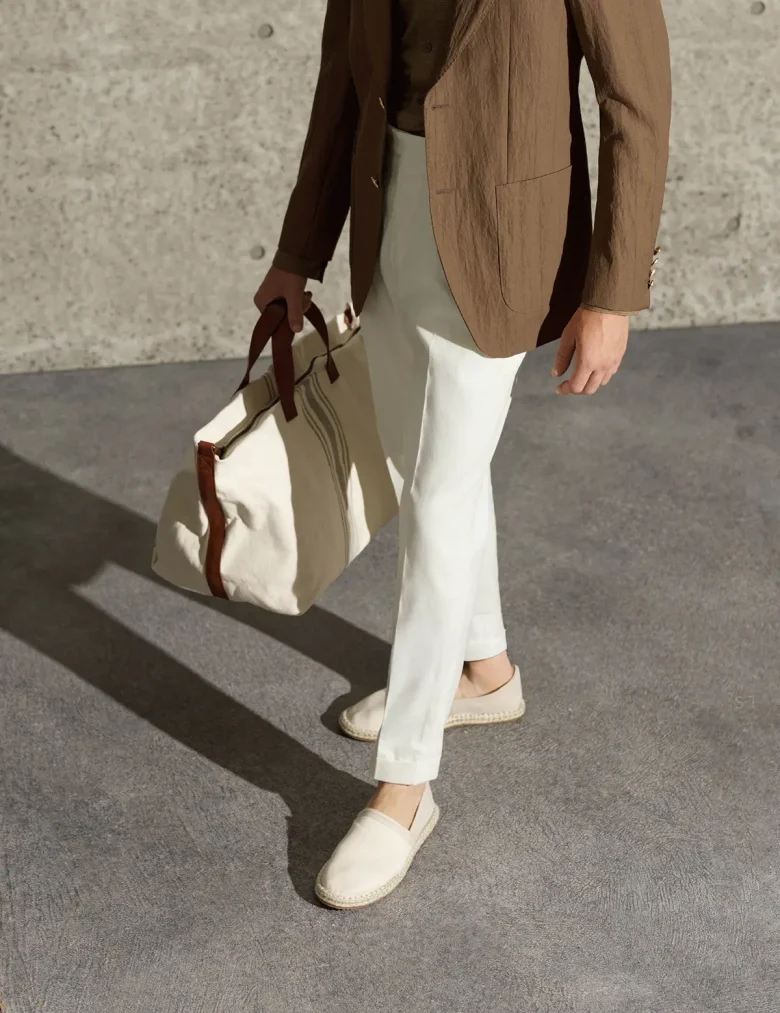
Getting the perfect pair of tailored pants starts long before the fabric is cut. Every measurement shapes how the finished trousers sit, move, and feel when worn. From the waist and hips to the rise, thigh, and trouser length, careful measuring accounts for your proportions. This article walks through the key measurements for tailored pants and what each one means for the final fit.
Starting with the waist:
The tailor measures your natural waist, keeping the tape level and not pulling it too tight. This measurement helps set the waistband size and gives the trousers a secure fit. You also share your preferred waistband position, such as sitting at the natural waist or slightly lower.
Measuring the hips:
Next, the tailor measures around the fullest part of the hips and seat. This measurement gives enough room for comfortable movement while keeping the trousers neat. The tailor also checks how your posture affects the fabric around this area.
Checking the rise:
The rise measures the space from the waistband area down toward the point between the legs. This detail affects comfort and the overall appearance of the trousers. A tailor checks the front and back rise to suit your body proportions and preferred fit.
Setting the thigh and knee:
The tailor measures around the fullest section of your thigh. The knee measurement follows to establish the desired leg shape. You can request a relaxed, straight, or slimmer profile based on your personal style. These measurements help the tailor keep the leg balanced from top to bottom.
Measuring the leg length:
For the inseam, the tailor measures from the upper inner leg down to the preferred trouser hem. Your shoes can influence this measurement, so wearing the footwear you usually pair with the trousers gives a clearer result. You can also discuss the amount of fabric you prefer at the shoe.
Checking posture and fit:
A good tailor does not rely on numbers alone. They watch your stance, shoulder position, hip alignment, and natural posture during the fitting. Small adjustments may improve comfort and give the trousers a cleaner appearance. The tailor may also mark areas that require extra room or a closer fit.
Final measurements before cutting:
The tailor reviews all measurements before cutting the fabric. They compare the waist, hips, rise, thigh, knee, and inseam to maintain balance. A fitting session can reveal small adjustments before the final stitching begins.